By Morning Light Landscaping | Serving Greater Cincinnati, OH
If you’ve been researching patio installation, retaining walls, pool decks, or any other hardscape project for your Cincinnati home, you’ve probably encountered a wide range of prices, opinions, and conflicting advice. Hardscape work is one of the most significant investments you can make in your outdoor space — and one of the most misunderstood. This guide covers everything homeowners in Greater Cincinnati need to know before hiring a hardscape contractor: what the process actually involves, what separates quality work from work that fails in five years, and how to make smart decisions at every stage of the project.
What Is Hardscape, and Why Does It Matter So Much?
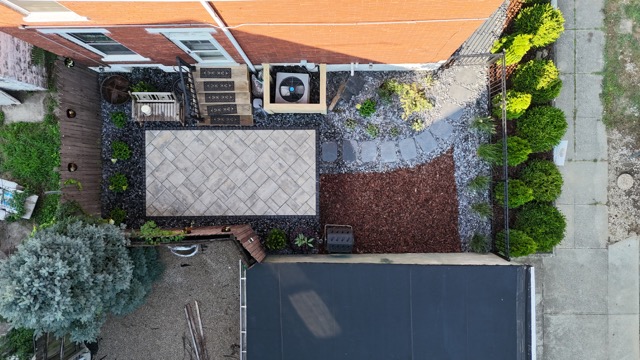
Hardscape refers to the non-living, structural elements of a landscape: patios, walkways, retaining walls, pool decks, steps, driveways, edging, and any other surfaces or structures built from stone, concrete, brick, or manufactured pavers. In residential landscaping, hardscape often forms the backbone of the entire outdoor design — it defines circulation, creates usable living space, manages drainage and grade, and establishes the visual framework that everything else (plantings, lighting, structures) is built around.
Done well, hardscape work enhances property value, extends your usable living space, and holds up for decades with minimal maintenance. Done poorly, it cracks, shifts, settles unevenly, drains toward the foundation, and becomes expensive to repair or replace. The difference between those two outcomes has almost nothing to do with which pavers you choose — it has everything to do with what happens below the surface before the first stone is ever laid.
Understanding the Foundation: Why Base Preparation Is Everything
The single most important factor in paver patio or hardscape installation is the base. Experienced hardscape contractors know this. Less experienced or less conscientious ones often cut corners here because base work is invisible in the finished product — and homeowners rarely know to ask about it.
A properly prepared hardscape base in Cincinnati’s climate typically includes:
- Excavation to the appropriate depth — generally 6 to 10 inches below the finished paver surface, depending on soil conditions, load requirements, and frost depth
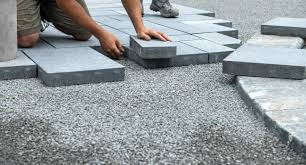
- Installation of a compacted aggregate base, typically crushed limestone or gravel, in multiple lifts (layers) to prevent settling
- Proper slope grading to ensure water drains away from structures and foundations at a minimum of 1 inch per 8 feet
- A bedding layer of coarse sand or stone dust, screeded to a precise, level plane before any pavers are placed
- Edge restraints installed around the perimeter to prevent lateral movement of the paver field over time
Cincinnati’s freeze-thaw cycle is particularly hard on hardscapes with inadequate base preparation. When moisture infiltrates a poorly compacted base and freezes, it expands — and that expansion causes pavers to heave, tip, and separate. A properly engineered base, fully compacted and properly graded, gives water nowhere to pool and gives the entire system the stability to move with frost and return without damage.
Paver Patio Installation: Material Options and What to Know
The paver market has expanded enormously over the past two decades. Homeowners in Greater Cincinnati now have access to a wide range of manufactured concrete pavers, natural stone products, and clay brick — each with its own performance characteristics, aesthetic qualities, and maintenance requirements.
Manufactured Concrete Pavers
Concrete pavers are the most widely used hardscape material in the residential market, and for good reason. Modern concrete pavers from manufacturers like Unilock — whose products Morning Light Landscaping is authorized to install — are engineered to exceptional tolerances, available in hundreds of colors, textures, and profiles, and designed to outperform poured concrete in freeze-thaw resistance. The interlocking nature of paver systems means they can flex slightly without cracking, and individual units can be removed and replaced if damage or utility access ever requires it.
Natural Stone (Bluestone, Travertine, Flagstone)
Natural stone patios carry a beauty and character that manufactured products can approach but never fully replicate. Bluestone is particularly popular in the Cincinnati market for its cool gray tones and durability. Travertine, though more commonly associated with pool deck applications, has gained traction as a patio surface for its textural appeal and heat-resistant properties. Flagstone — irregularly shaped natural stone set in a dry-laid or mortar-set pattern — suits more naturalistic landscape designs. Natural stone generally carries a higher material cost than concrete pavers, and installation is more labor-intensive.
Pool Deck Installation Considerations
Pool decks introduce additional performance requirements that standard patio installations don’t. The surface must be slip-resistant when wet, comfortable underfoot in direct sun (ruling out some dark-colored materials), resistant to pool chemicals, and pitched precisely enough to drain efficiently while remaining level enough to be safe to walk on. Concrete pavers with textured surfaces, travertine, and certain types of natural stone are well-suited to pool deck applications. The base preparation around a pool must also account for the pool shell itself, which introduces unique drainage and structural considerations that require experienced handling.
Retaining Wall Installation: When, Why, and How
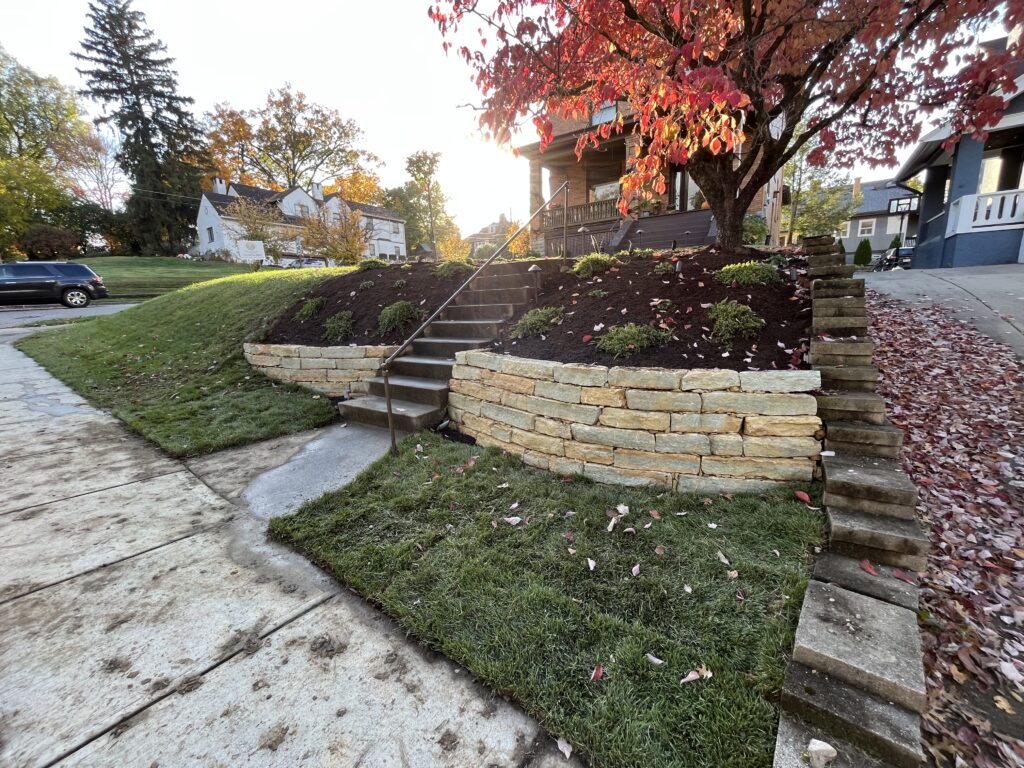
Retaining walls serve both structural and aesthetic purposes in the residential landscape. Structurally, a retaining wall holds back soil on a sloped site, creating level terraces for planting, patio space, or lawn area. Aesthetically, a well-designed retaining wall adds architecture to the landscape — defining spaces, creating visual layers, and providing opportunities for planting pockets and integrated lighting.
The engineering requirements for retaining walls increase significantly with wall height. Walls under 2 feet are typically straightforward landscape installations. Walls between 2 and 4 feet require careful attention to drainage, batter (the slight backward lean engineered into the wall face), and deadman anchors or geogrid reinforcement to resist the pressure of the retained soil. Walls over 4 feet may require engineering review in some municipalities and almost always require geogrid reinforcement installed in horizontal layers within the backfill.
The most critical — and most frequently neglected — element of a retaining wall installation is drainage behind the wall. Without a proper gravel drainage column and perforated drain pipe at the base, water pressure builds up in the retained soil and exerts horizontal force on the wall face. Over time, this hydrostatic pressure causes walls to bow, tilt, and ultimately fail. A proper retaining wall installation includes drainage as a fundamental design element, not an afterthought.
Drainage and Hardscape: Understanding the Relationship
Every hardscape installation affects how water moves through your property. Impervious surfaces — patios, driveways, pool decks — prevent infiltration and redirect water elsewhere. A well-designed hardscape system accounts for this, grading all surfaces away from the home and toward appropriate outlets, and incorporating drainage features where necessary.
In areas where surface drainage alone can’t manage the volume of water your hardscape generates, additional drainage systems may be warranted: channel drains along patio edges, area drains in low spots, or French drains to intercept subsurface water before it reaches foundations or hardscape bases. Working with a contractor who understands the relationship between hardscape design and site drainage is essential to avoiding problems that develop months or years after installation.
Frequently Asked Questions
Q: How long does a paver patio installation take?
A: Most residential paver patio projects take between three and seven days from excavation to completion, depending on the size and complexity of the installation. Larger projects with retaining walls, multiple levels, or intricate patterns may take longer. Weather delays — particularly rain, which halts base work — can add days. A reputable contractor will give you a realistic timeline before work begins and communicate proactively if conditions change it.
Q: How much does a paver patio cost in Cincinnati?
A: In the Greater Cincinnati market, professionally installed paver patios typically range from $18 to $35 or more per square foot, depending on the material selected, site complexity, access, and what the design includes. A basic 400-square-foot patio with standard concrete pavers might start around $8,000–$10,000. Natural stone, complex patterns, multiple levels, built-in lighting, and retaining wall integration all increase the investment. Be cautious of bids that come in dramatically below market — they almost always reflect compromises in base preparation or material quality.
Q: Do I need a permit for a paver patio in Ohio?
A: Most residential paver patio installations in Greater Cincinnati do not require a permit, as they are ground-level impervious surface additions without structural components. However, retaining walls above a certain height (typically 4 feet in most Ohio municipalities) may require a permit, and work within setbacks or near drainage easements may trigger review. Your contractor should be familiar with local requirements and advise you accordingly.
Q: How do I clean and maintain paver patios?
A: Paver maintenance is relatively straightforward. Annual or biannual cleaning with a paver-specific cleaner (or a mild detergent and stiff brush) removes organic buildup. Polymeric sand — a sand-and-polymer mixture swept into the joints and then activated with water — should be refreshed every few years as it breaks down and washes out. Sealing pavers every two to three years protects color, reduces staining, and inhibits weed growth in joints. If individual pavers crack or settle, they can be lifted and reset without disturbing the surrounding field.
Q: Why are my pavers sinking or separating after only a few years?
A: Settling, sinking, and separation are almost always the result of inadequate base preparation — insufficient compaction, base depth that doesn’t account for the frost depth in Cincinnati’s climate, or improper drainage that allows water to saturate and destabilize the base layer. In some cases, edge restraints that weren’t properly staked can allow lateral movement. Pavers themselves almost never fail; it’s the system beneath them that determines long-term performance.
Q: Can I install a paver patio myself?
A: Technically yes — paver installation is a DIY project that capable homeowners attempt. The challenge is the base preparation: renting and operating a plate compactor, achieving proper grades, and screeding a bedding layer to the tolerances needed for a flat finished surface are more difficult than they appear. Mistakes in base prep are invisible at completion but manifest as uneven, shifting pavers within a few seasons. For a project that will last decades and add real value to your home, professional installation is the better investment.
Q: What’s the difference between a hardscape contractor and a general landscaper?
A: A general landscaper typically focuses on plant installation, lawn maintenance, and basic outdoor upkeep. A hardscape contractor — or a landscape design-and-build firm with hardscape expertise — specializes in the structural, built elements of the outdoor environment: patios, walls, steps, drainage systems. The skills involved in quality hardscape installation are distinct from planting knowledge, and it’s worth finding a contractor whose core competency is in the built environment, not just the planted one.
Choose Morning Light Landscaping for Your Next Paver Patio & Hardscape Installation
Morning Light Landscaping is an authorized Unilock contractor serving Greater Cincinnati, including Loveland, Wyoming, Hyde Park, Indian Hill, Anderson Township, Mason, West Chester, and surrounding communities. Our full design-and-build process ensures every hardscape project begins with the right plan and ends with exceptional, lasting results.