
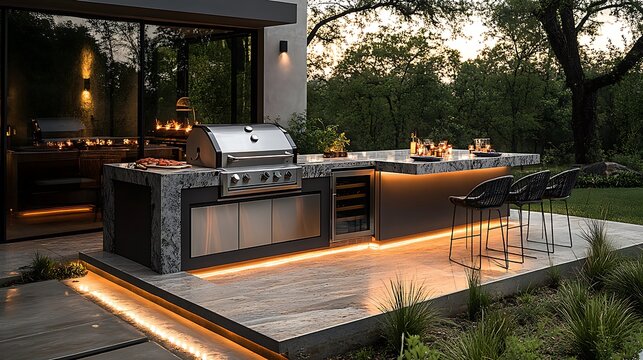
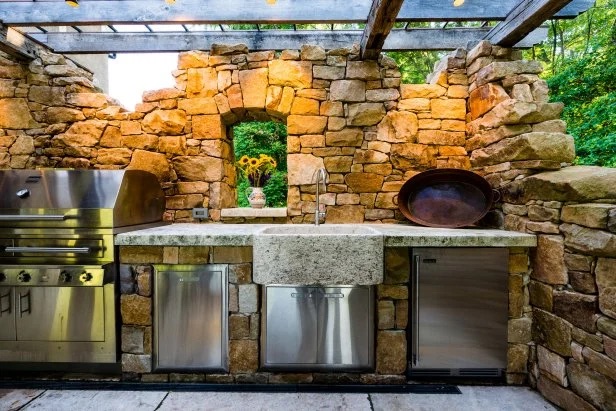
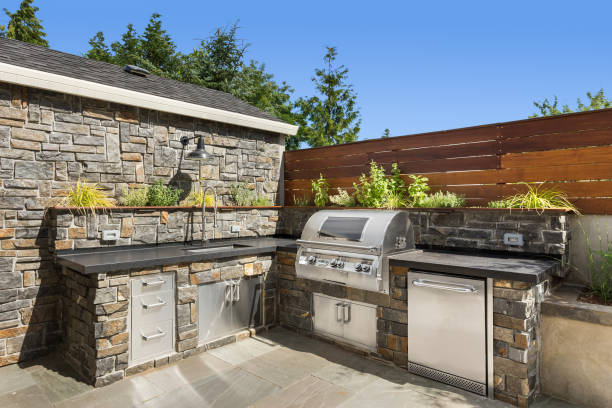
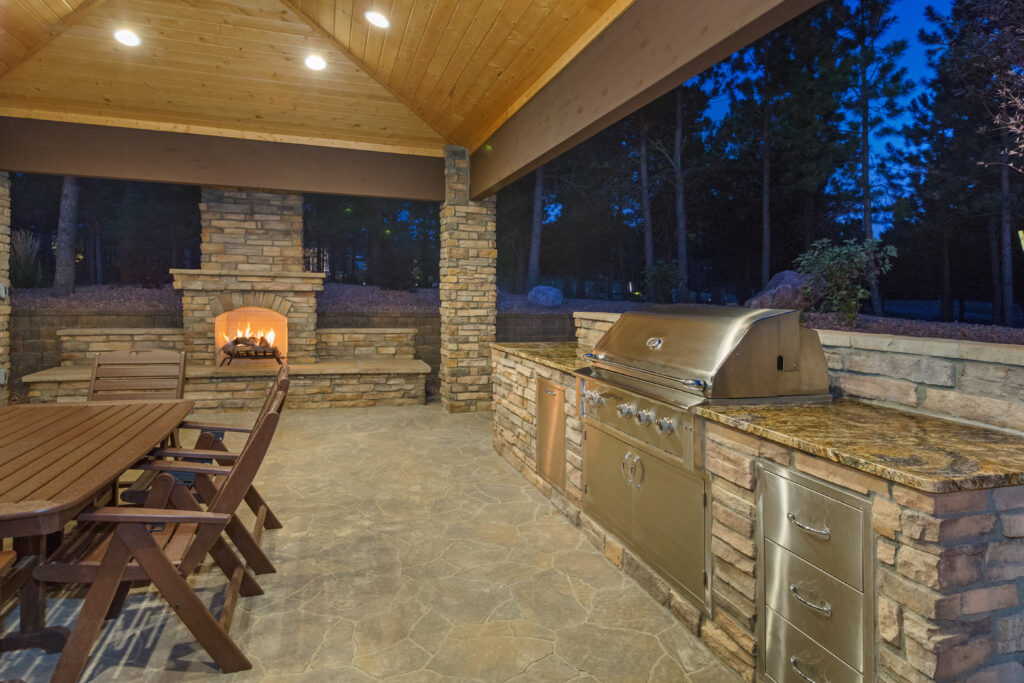
An outdoor kitchen is one of the most transformative additions you can make to a Cincinnati home. It changes how you cook, how you entertain, and how you think about your backyard — turning what was once a simple patio into a destination. But an outdoor kitchen is also one of the most complex outdoor installations a homeowner can undertake, involving structural construction, gas and electrical work, countertop fabrication, and appliance integration, all in an environment that is exposed to Ohio’s full range of weather conditions year-round.
Done right, an outdoor kitchen is a joy for decades. Done wrong — with inadequate structure, improper gas installation, the wrong materials, or no integration with the surrounding outdoor space — it becomes an expensive source of frustration. This guide walks through everything Cincinnati homeowners need to know before planning an outdoor kitchen: how these installations actually work, what decisions matter most, what common mistakes look like, and how to evaluate contractors and proposals with confidence.
Why Outdoor Kitchens Require a Different Approach Than Other Outdoor Projects
Most landscape projects — a paver patio, a planting installation, even a pergola — are forgiving of modest design variations and can be adjusted or supplemented after the fact. Outdoor kitchens are less accommodating. The infrastructure decisions made early in the process — where the gas line enters, how the electrical circuits are routed, how wide the counter run is, where the refrigeration goes — are embedded in the structure of the kitchen itself and are extremely difficult to change once construction is complete.
This is why the design phase of an outdoor kitchen project is not a formality — it’s where most of the most consequential decisions get made. Before a single block is laid or a single appliance is ordered, you need to know exactly what the kitchen will contain, how it will be used, where every utility connection will be located, and how the kitchen relates to the patio, the dining area, the fire feature, and every other element of the outdoor living space. Getting that thinking right before construction begins is what separates outdoor kitchens that work beautifully from ones that almost work.
Siting and Orientation: Getting the Location Right
Where an outdoor kitchen sits on your property — and which direction it faces — has a bigger impact on how enjoyable it is to use than almost any other single decision. Several factors should drive this conversation with your designer:
Wind Direction
The prevailing wind direction in Greater Cincinnati is generally from the southwest. If your grill is positioned so that the cook faces into the prevailing wind, you’ll spend every cookout squinting into smoke. If the wind carries smoke toward the dining area, your guests will spend the meal uncomfortable. Orienting the cooking area so that smoke moves away from both the cook and the primary seating area — taking into account that wind direction varies and that structures, trees, and fencing create local wind patterns — is one of the first and most important siting considerations.
Sun Exposure
A west-facing outdoor kitchen will be in direct afternoon sun during Cincinnati’s hottest summer months — exactly when you’re most likely to be cooking dinner. That’s a comfort issue for the cook and a practical issue for refrigeration appliances, which work significantly harder in direct sun. Eastern or northern exposures, or positions with afternoon shade from existing trees or structures, generally provide the most comfortable cooking environment from late spring through early fall.
Proximity to the House
The closer the outdoor kitchen is to the home, the more practical the connection to indoor utilities and the more natural the flow between indoor and outdoor cooking and serving. Gas line runs are shorter and less expensive; electrical runs are simpler; carrying food and supplies from the indoor kitchen to the outdoor one is easier. The tradeoff is that kitchens directly adjacent to the home require careful attention to clearance from combustibles (particularly important for grills and fire features) and to how the smoke and cooking odors interact with windows and doors.
Relationship to the Dining and Gathering Area
An outdoor kitchen that’s isolated from the rest of the outdoor living space defeats much of its purpose. The cook should be able to see and interact with guests, not be sequestered at a remote work station. Ideally, the kitchen is positioned so the cook faces the dining table and gathering area — part of the outdoor living experience rather than apart from it. This social orientation is one of the most consistent things homeowners who cook outdoors report as making the experience genuinely enjoyable.
Structure: What Your Outdoor Kitchen Is Actually Built From
The frame and substrate of an outdoor kitchen are invisible in the finished product, which is precisely why they’re so often where corners get cut. Understanding what’s inside the walls matters more for outdoor kitchens than almost any other built element in the landscape, because exposure to moisture, temperature cycling, and cooking heat will reveal the quality of the underlying construction over time in ways that become very expensive to address after the fact.
Steel Stud Framing
Steel stud framing — the same type of metal framing used in commercial interior construction — is one of the most common substrates for outdoor kitchen construction. It’s dimensionally stable, rot-proof, and doesn’t provide a food source for insects. The frame is typically covered with cement board (also called backer board), which provides a moisture-resistant substrate for the finish surface. Steel stud kitchens are flexible in shape and configuration and can be built to virtually any custom design.
One important detail with steel stud framing: the bottom tracks, which sit directly on the patio surface, are exposed to moisture wicking if they’re not properly isolated from the concrete or paver surface below. A properly built kitchen includes a moisture barrier at the base and attention to how water will drain away from the structure.
Concrete Block (CMU) Construction
Concrete masonry unit construction — standard concrete block laid with mortar — is the most structurally robust approach to outdoor kitchen framing. A CMU kitchen is effectively a piece of masonry, impervious to rot, insects, and structural movement. The tradeoff is weight: a concrete block outdoor kitchen is extremely heavy, and the patio beneath it needs to be able to support that load. CMU construction also requires more skilled labor and takes longer to build than steel stud framing, which typically results in higher installation costs.
Aluminum Framing Systems
Prefabricated aluminum framing systems — essentially an engineered kit of aluminum components that assemble into an outdoor kitchen frame — have become increasingly popular as a middle-ground option. They’re lighter than CMU, more dimensionally stable than wood, and faster to assemble than custom steel stud framing. Quality varies significantly between manufacturers; the better systems are genuinely robust, while lower-grade aluminum kits can flex and rack over time. For standard kitchen configurations, a quality aluminum framing system is an efficient and effective substrate choice.
What to Avoid: Wood Framing
Some outdoor kitchen installations, particularly lower-cost ones, use wood framing as the structural substrate. This is a mistake in Cincinnati’s climate. Wood in an outdoor environment absorbs moisture, expands and contracts with temperature and humidity changes, rots over time, and provides an inviting habitat for insects. A wood-framed outdoor kitchen may look fine in year one, but the structural degradation that follows is predictable and inevitable. Any proposal that includes wood framing as the primary substrate for an outdoor kitchen should be treated as a warning sign.
Exterior Finish Options: Durability Meets Design
The exterior finish of an outdoor kitchen — what you see and touch — needs to perform in an outdoor environment while also looking good for years. The options span a wide aesthetic range, and material selection should be driven by both practical performance requirements and how the kitchen integrates with the surrounding patio and landscape design.
Stone Veneer
Natural and manufactured stone veneer is one of the most popular outdoor kitchen finishes in the Greater Cincinnati market, and for good reason: it’s visually rich, integrates naturally with stone patios and retaining walls, and holds up extremely well in outdoor exposure when properly installed. The key installation detail is the application substrate — stone veneer must be applied to cement board or a scratch coat of mortar over cement board, never directly to drywall or plywood, and the installation must allow for proper moisture drainage behind the veneer to prevent freeze-thaw damage.
Stucco
Exterior stucco — a cement-based plaster applied in layers over the framed substrate — offers a clean, contemporary finish with excellent weather resistance and reasonable cost relative to stone. Stucco can be tinted to virtually any color and finished in smooth, sand, or textured profiles to suit the overall design aesthetic. It requires periodic inspection and touch-up where cracks develop over time, particularly at corners and transitions, but a well-applied stucco finish on a properly built substrate performs admirably in Cincinnati’s climate.
Porcelain Panel Systems
Large-format porcelain panels — essentially oversized tile in slab format — have become an increasingly popular exterior cladding option for contemporary outdoor kitchen designs. They’re impervious to moisture, UV-stable, easy to clean, and available in finishes that convincingly replicate stone, concrete, and wood grain. They require skilled installation, particularly at corners and transitions, and the grout joints need to be maintained, but as a finished exterior surface they offer exceptional durability and a clean, modern aesthetic.
Countertops: Choosing the Right Surface for an Outdoor Cooking Environment
Outdoor countertop selection involves tradeoffs that don’t exist in indoor kitchen design. The surface must withstand direct sun exposure, rain, temperature extremes, cooking heat near the grill, grease splatter, and cleaning — all while maintaining its appearance. Not every material that works beautifully indoors makes a sensible outdoor countertop.
Granite
Granite is the most widely used outdoor countertop material in the Greater Cincinnati market, and its performance record is excellent. It’s hard, heat-resistant, relatively impervious to moisture when sealed, and available in a range of colors and patterns that integrate well with both traditional and contemporary kitchen designs. The main caveat outdoors is color retention: some granite colors, particularly darker ones, experience subtle fading with prolonged UV exposure over many years. Proper sealing, refreshed every one to two years, protects the surface and maintains its appearance.
Porcelain Tile
Porcelain tile countertops are among the most durable and lowest-maintenance options for outdoor kitchens. Porcelain is fully vitrified — it absorbs essentially no water — which means it’s inherently resistant to freeze-thaw damage in ways that natural stone is not. It’s UV-stable, easy to clean, and available in essentially unlimited colors, sizes, and surface textures. The main design consideration is grout: grout joints require maintenance and can be a weak point if not properly sealed and periodically refreshed. Large-format tile with minimal grout joints addresses this concern.
Concrete
Cast-in-place or precast concrete countertops offer a level of customization that fabricated stone cannot match — any shape, any color, any integral features (drain boards, integral sinks, decorative aggregates) are possible. Concrete performs well outdoors when properly sealed, though it requires more attentive sealing maintenance than granite because it’s more porous. Hairline cracks can develop over time due to thermal cycling; these are typically aesthetic rather than structural but should be addressed promptly to prevent moisture infiltration.
What to Avoid: Marble, Limestone, and Unsealed Natural Stone
Soft and porous natural stones — marble, limestone, travertine — are unsuitable as outdoor kitchen countertop materials in Cincinnati’s climate. Marble etches easily when exposed to acidic foods and cleaning products. Limestone and travertine are susceptible to freeze-thaw spalling when moisture infiltrates the stone. Any natural stone countertop used outdoors must be dense, hard, and properly sealed; the softer decorative stones that look beautiful in indoor applications will disappoint in an outdoor cooking environment.
Appliances: Building the Right Kitchen for How You Actually Cook
The appliance selection for an outdoor kitchen should be honest about how the space will be used — not aspirational about a version of yourself that cooks elaborate multi-course meals outdoors every weekend when the reality is Sunday afternoon burgers and the occasional dinner party. The best outdoor kitchens are the ones that match real usage patterns, built with quality appliances in the categories that matter and restraint in the ones that don’t.
The Built-In Grill: The Heart of the Kitchen
The built-in grill is the centerpiece of almost every outdoor kitchen, and it’s the appliance where quality matters most. Built-in grills differ from freestanding ones in that they’re designed to be surrounded by cabinetry or structure on all sides and must have appropriate ventilation clearances met by the surrounding construction. Quality built-in grills are available in natural gas and propane configurations and in sizes from 30 inches to 54 inches wide for residential applications.
Key specifications to evaluate: BTU output (more BTUs mean faster recovery after adding cold food, but raw BTU numbers are often overstated as a marketing metric — construction quality and burner design matter more); lid construction (a well-fitting, heavy lid retains heat for indirect cooking); warranty terms; and the availability of replacement parts and burner kits years down the line. Major brands with established dealer networks — Weber, Lynx, Twin Eagles, Fire Magic, Coyote — offer better long-term support than no-name imports at lower price points.
Refrigeration
An outdoor-rated undercounter refrigerator is one of the most useful additions to an outdoor kitchen — keeping beverages, marinades, condiments, and prepped ingredients at hand without trips inside. The critical specification here is that the unit must be rated for outdoor use. Standard indoor refrigerators, even commercial-grade ones, are not designed to operate in the ambient temperature range of an Ohio summer or to withstand the humidity and temperature cycling of outdoor exposure. Outdoor-rated refrigerators have sealed components, insulation designed for the full ambient temperature range, and corrosion-resistant construction throughout.
Undercounter refrigerators should be positioned to minimize direct sun exposure, which significantly increases the compressor’s workload and energy consumption. A shaded or partially shaded location — under the countertop overhang, protected from afternoon western sun — is ideal.
Side Burners
A side burner — a gas-powered burner integrated into the countertop surface beside the grill — extends the outdoor kitchen’s cooking capability to anything that requires a pot or pan: sauces, side dishes, boiling water, sautéing. Single- and double-burner configurations are available; high-BTU burners (15,000 to 30,000 BTUs) are appropriate for serious cooking applications like boiling large pots of water or maintaining a rolling sauté. A hinged lid covers the burner when not in use and creates additional counter space.
Pizza Ovens
Wood-fired and gas-fired pizza ovens have become one of the most sought-after outdoor kitchen additions in the Greater Cincinnati market, and the quality and range of residential pizza oven options has expanded dramatically. Wood-fired ovens reach temperatures of 800°F and above, producing the char and crisp crust associated with Neapolitan-style pizza; they also handle bread baking, roasting, and anything else that benefits from high retained heat. Gas-fired ovens offer the convenience of instant-on operation and temperature control without the fuel management and learning curve of wood firing. Either way, a properly installed pizza oven dramatically expands what an outdoor kitchen can produce and becomes one of the most-used features of the outdoor living space.
Outdoor-Rated Cabinetry
Storage in an outdoor kitchen is often underplanned. Stainless steel or marine-grade polymer cabinet doors set into the kitchen structure provide weatherproof storage for cooking equipment, propane accessories, cleaning supplies, and entertaining items — reducing the number of trips inside and keeping the outdoor kitchen genuinely self-sufficient. Stainless steel is the standard choice: it’s weather-resistant, easy to clean, and matches the aesthetic of most built-in appliances. Look for 304-grade stainless (the same alloy used in kitchen appliances and medical equipment) rather than lower-grade steel that will show rust streaks within a few seasons.
Gas and Electrical: The Infrastructure That Has to Be Right
The utility infrastructure of an outdoor kitchen — gas supply and electrical service — is where safety and code compliance are non-negotiable, and where the work must be performed by or under the supervision of licensed tradespeople.
Gas Supply
Natural gas is the preferred fuel source for outdoor kitchens served by existing gas service, and the reasons are practical: no tanks to manage, no running out of fuel mid-cookout, lower fuel cost per BTU than propane, and a cleaner integration into a permanent installation. Extending gas service from the home to the outdoor kitchen requires a licensed plumber to size and install the new gas line, select appropriate fittings and pipe material for underground or exposed runs, and pressure-test the completed line before any appliance is connected.
Gas line sizing is a technical calculation that accounts for the total BTU demand of all connected appliances, the length of the run from the meter, and any elevation changes. Undersized gas lines produce low pressure at the burners, resulting in poor performance — an issue that’s often misdiagnosed as appliance failure when the real problem is the supply line. Getting the sizing right before the line is buried is essential; correcting it afterward requires excavation.
Propane is the appropriate choice where natural gas service isn’t available or where extending the gas line to the kitchen location isn’t practical. Propane requires proper tank sizing (typically 100 to 500 gallons for permanent outdoor kitchen installations), appropriate setbacks from the structure, and a properly sized regulator. Propane BTU content is higher than natural gas per cubic foot, which means appliances designed for natural gas must be converted to propane operation with appropriate orifice kits — not simply connected to a propane supply.
Electrical Service
Most outdoor kitchens require at least one dedicated outdoor electrical circuit for refrigeration, and additional circuits if the installation includes a pizza oven with electric ignition, power burners with electronic controls, landscape lighting integration, or audio and entertainment systems. All outdoor electrical work must use GFCI-protected outlets and weatherproof covers, and must comply with local electrical codes regarding buried conduit depth and circuit protection.
Planning electrical circuits before the kitchen is built — not after — allows conduit to be properly routed within the structure rather than surface-mounted afterward. Surface-mounted electrical conduit on an outdoor kitchen is a telltale sign of infrastructure that was added as an afterthought; it’s functional but looks unfinished and is more exposed to physical damage.
Integrating the Outdoor Kitchen with the Surrounding Space
The best outdoor kitchens don’t stand alone — they’re integrated into a cohesive outdoor living design that includes the patio underfoot, the dining area adjacent to the kitchen, the shade structure above, the lighting system that makes the space usable after dark, and the surrounding landscape that provides the visual setting for all of it.
The patio surface beneath and around the outdoor kitchen needs to be large enough to accommodate the kitchen footprint, the cooking zone in front of it, the dining table, and comfortable circulation — a minimum of 400 square feet for a modest outdoor kitchen and dining area, and often significantly more for larger kitchens with island seating or adjacent lounge areas. The patio material needs to be slip-resistant, heat-tolerant near the cooking area, and appropriate to the aesthetic of the kitchen and the surrounding landscape.
Overhead coverage — a pergola, a shade sail, a solid roof structure — makes an outdoor kitchen dramatically more usable in Cincinnati’s summer heat and dramatically extends the season into spring and fall. A pergola positioned over the kitchen and dining area provides shade, defines the outdoor room, and creates the opportunity to integrate lighting, fans, and even heating elements that extend comfortable use well into October.
Landscape lighting designed alongside the kitchen — not added later — integrates the kitchen into the evening landscape rather than leaving it as an illuminated island in a dark yard. Task lighting over the cooking surface, ambient lighting in the dining area, and accent lighting in the surrounding garden create a layered lighting environment that is both functional and beautiful.
Frequently Asked Questions
How much does an outdoor kitchen cost in Cincinnati?
Outdoor kitchen costs in Greater Cincinnati vary widely based on size, material selection, appliance choices, and the complexity of the required infrastructure. A straightforward installation with a quality built-in grill, modest counter space, and basic storage typically starts in the $12,000 to $18,000 range. A fully equipped kitchen with a pizza oven, refrigeration, side burner, island seating, premium countertops, and high-end finishes can reach $40,000 to $70,000 or more. The variables that most dramatically affect cost are counter square footage, appliance count and quality, and the distance and complexity of gas and electrical runs from the home. Budget planning should also account for the surrounding patio and pergola as part of the total outdoor living investment, since those elements need to be sized and designed in coordination with the kitchen.
Do outdoor kitchens add value to your home?
Outdoor kitchens are consistently cited in real estate surveys as a desirable feature that buyers will pay a premium for, particularly in the price ranges where Greater Cincinnati’s most desirable communities — Indian Hill, Hyde Park, Mason, Wyoming, Loveland — transact. The return on investment varies based on the quality and integration of the installation, how well it suits the home’s overall profile, and market conditions. A high-quality outdoor kitchen that is thoughtfully integrated into a well-designed outdoor living space tends to return more of its cost at sale than a standalone kitchen addition without the surrounding design context. More immediately, the value it adds to daily life — in enjoyment, in entertaining capability, in how you use your home — is meaningful independent of resale calculations.
What is the best material for an outdoor kitchen countertop?
For most Cincinnati homeowners, granite offers the best combination of durability, heat resistance, aesthetic range, and long-term performance. It holds up well through Ohio’s freeze-thaw cycles when properly sealed, is readily available through local fabricators, and integrates naturally with a wide range of kitchen finishes. Large-format porcelain tile is an excellent alternative for homeowners who want lower maintenance and virtually unlimited design options. Concrete is a compelling choice for custom designs where a specific color or integral feature is desired. Avoid marble, limestone, and travertine, which don’t perform reliably in outdoor cooking environments in Cincinnati’s climate.
Does an outdoor kitchen need to be covered?
An outdoor kitchen doesn’t require a permanent roof to function, but coverage dramatically improves both usability and longevity. From a usability standpoint, shade coverage over the cooking area makes cooking in Cincinnati’s July heat genuinely comfortable rather than miserable. Coverage also extends the usable season into spring and fall when rain would otherwise send everyone inside. From a longevity standpoint, a pergola or solid overhead structure protects appliances, countertops, and exterior finishes from the full force of precipitation, UV exposure, and debris accumulation — all of which accelerate wear. If the budget requires phasing, plan the overhead structure into the design from the start, even if construction is deferred.
Can an outdoor kitchen be used year-round in Cincinnati?
Cincinnati’s winters do limit comfortable outdoor cooking, but the shoulder seasons — April through May and September through November — offer genuinely excellent outdoor living conditions that a well-designed outdoor kitchen makes the most of. Many Cincinnati homeowners with outdoor fire features cook and entertain outdoors comfortably well into November. The kitchen itself needs proper winterization: gas supply valves should be closed at the source, any water supply shut off and blown out, appliances covered with purpose-made covers, and the refrigerator either removed or set to its warmest setting to protect the compressor from extreme cold. A kitchen built with quality materials and proper construction holds up through Cincinnati winters without issue.
How long does outdoor kitchen installation take?
The construction phase of an outdoor kitchen — from first block to finished surface — typically runs two to four weeks for a moderately sized installation. However, the full project timeline, including design, permitting if required, material lead times for custom countertops and specialty appliances, gas and electrical rough-in, and coordination between trades, generally runs eight to fourteen weeks from signed contract to first cookout. Appliance lead times in particular can be significant for custom or specialty items. Planning an outdoor kitchen for summer enjoyment means starting the design process in late winter or early spring.
Do I need a permit for an outdoor kitchen in Ohio?
Permit requirements for outdoor kitchens in Greater Cincinnati vary by municipality and by what the installation includes. Structures attached to the home typically require a building permit. Gas line extensions require a plumbing permit pulled by a licensed plumber in Ohio. Electrical work requires an electrical permit. In some jurisdictions, freestanding outdoor structures over a certain square footage require permits regardless of attachment to the home. A reputable outdoor kitchen contractor handles permitting as a routine part of the project — any contractor who suggests avoiding permits or dismisses the question should be a red flag.
What’s the difference between outdoor-rated and indoor appliances, and does it really matter?
It matters enormously, and this is one of the most important distinctions to understand when planning an outdoor kitchen. Outdoor-rated appliances are specifically engineered for the temperature extremes, humidity, UV exposure, precipitation, and thermal cycling of outdoor environments. The compressors in outdoor-rated refrigerators are designed to operate across a wide ambient temperature range — from winter cold to summer heat — where standard refrigerator compressors will fail prematurely. Electronic controls in outdoor-rated appliances are sealed against moisture infiltration. Stainless components use higher-grade alloys that resist corrosion in outdoor exposure. Using indoor appliances in an outdoor kitchen to save money is a false economy; the appliances will fail earlier, potentially void manufacturer warranties, and in the case of gas appliances used in ways they weren’t designed for, can create safety issues.
How do I keep my outdoor kitchen clean and maintained?
Routine outdoor kitchen maintenance is straightforward and takes very little time when done consistently. After each use, clean grill grates while still warm, wipe down countertops and appliance faces, and empty drip trays. Monthly, inspect and clean the burner tubes of the grill to ensure proper gas flow and prevent flare-ups. Reseal granite countertops annually or when water no longer beads on the surface. Clean stainless appliance faces with a stainless-specific cleaner applied in the direction of the grain to maintain appearance and prevent pitting. Seasonally, inspect exterior finish surfaces for any cracks or chips that should be addressed before water infiltration causes damage. Cover appliances during extended periods of non-use. At winterization, follow the gas shutoff and appliance cover procedures described above. A kitchen that receives this level of consistent care will look and function as well in year ten as it did in year one.
Morning Light Landscaping designs and builds complete outdoor kitchens and outdoor living spaces throughout Greater Cincinnati, including Indian Hill, Hyde Park, Loveland, Wyoming, Mason, West Chester, Anderson Township, and surrounding communities. Our full design-and-build process ensures your outdoor kitchen is planned as part of a cohesive outdoor living space — not assembled as a standalone addition — so every element works together beautifully from day one.
Planning an outdoor kitchen in Cincinnati? Visit our outdoor kitchen installation page to see our process and request a consultation.