
Retaining Wall Installation
Retaining Wall Services
Retaining walls are one of those things that look simple from the outside — until one fails. A wall that settles, leans, or blows out after a wet winter isn’t just an eyesore; it’s a real problem for your property, your drainage, and sometimes your neighbors. We build retaining walls the right way: proper base prep, correct drainage behind the wall, and materials matched to your specific site conditions.
We work with homeowners across Greater Cincinnati on everything from short decorative garden walls to large structural walls managing serious grade changes. If your property slopes, chances are a well-designed retaining wall could be doing something useful with that grade.
Retaining Wall Materials
Allan Block / Segmental Retaining Wall Block — The most common and cost-effective option for most residential applications. Interlocking block systems create strong, flexible walls that hold up well to Cincinnati’s freeze-thaw cycles. Available in a range of colors and textures.
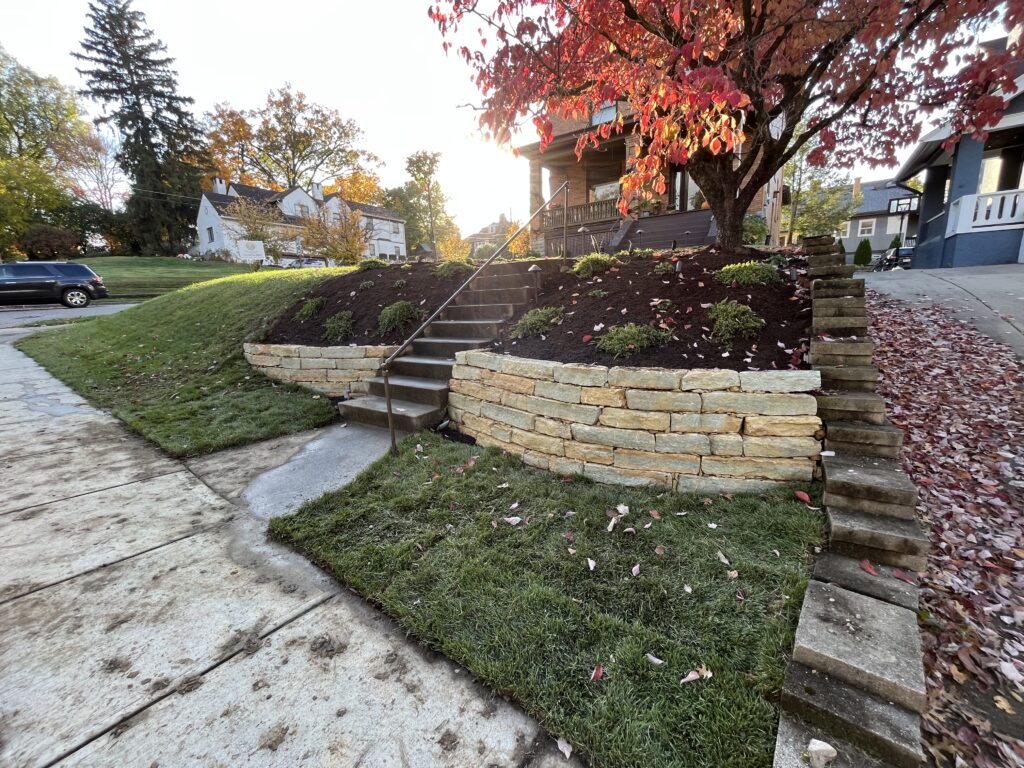
Natural Stone — Limestone, fieldstone, and dry-stacked stone walls for a more traditional look. Particularly well-suited for older neighborhoods and naturalistic landscape styles. Requires more skilled installation but creates walls that look like they’ve been on the property forever.
Pressure-Treated Timber — A practical option for garden beds, terraced areas, and lower walls. Less expensive than block or stone, but with a shorter lifespan. Best for applications where a wall is more functional than feature.
Poured Concrete / Keystone — For larger walls requiring engineered design and in some cases a permit. We’ll tell you upfront if your project needs a structural engineer.
How We Build Retaining Walls
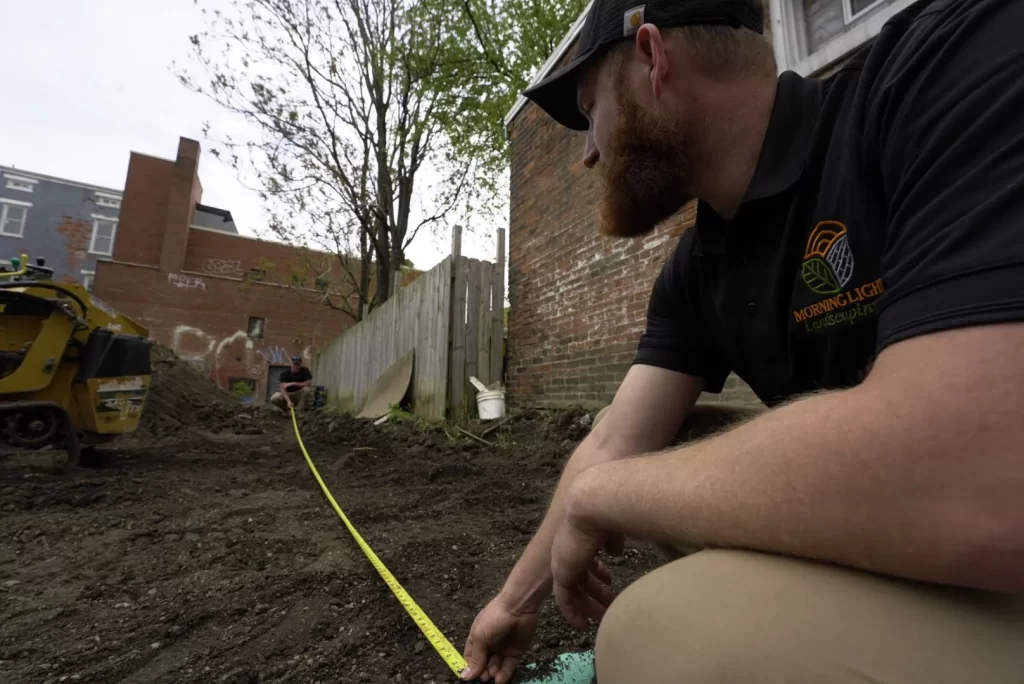
Every retaining wall we build includes a compacted gravel base, a drainage layer behind the wall (typically perforated pipe in gravel, discharging away from the structure), and proper batter (the slight backward lean that keeps taller walls from pushing out over time). These aren’t optional details — they’re what separates a wall that lasts twenty years from one that starts moving in three.
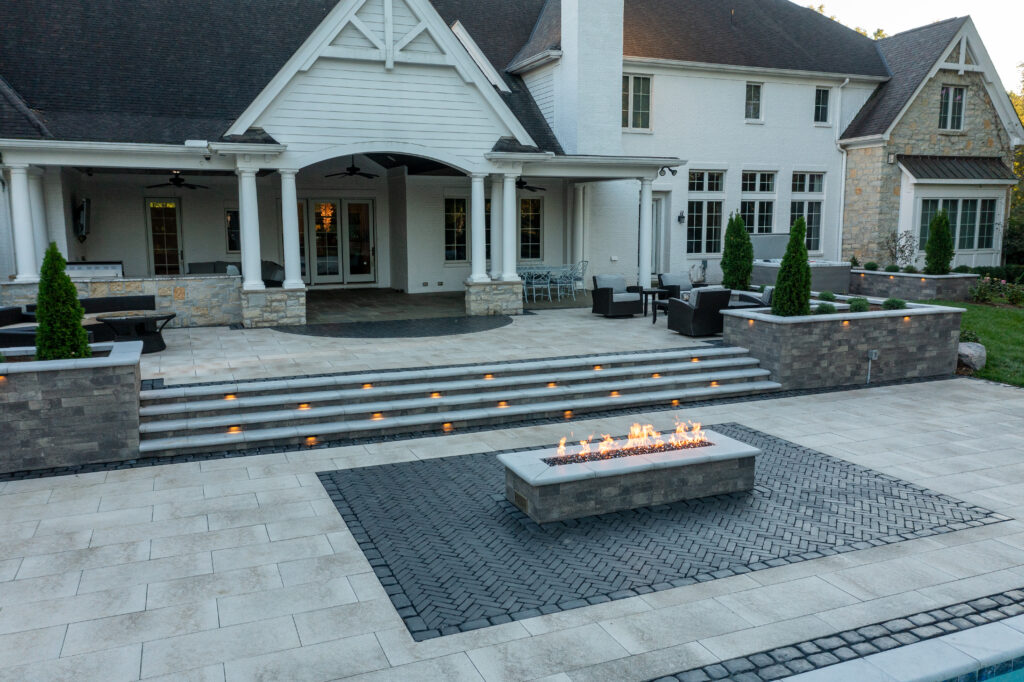
We also tie retaining walls into the broader landscape plan wherever possible. A retaining wall doesn’t have to just hold — it can create planting terraces, define outdoor rooms, or anchor a patio transition that makes the grade change feel intentional rather than like a problem that got patched.
Q&A
Most residential retaining walls run between $3,500 and $18,000 depending on height, length, material, and site access. Large structural walls with engineered design requirements can go higher. We provide detailed written proposals before any work begins.
In most jurisdictions, walls under 4 feet in height don’t require a permit. Walls over 4 feet — or walls with a surcharge (a driveway, structure, or slope above them) — typically require a permit and in some cases a stamped engineer’s drawing. We’ll handle the research for your specific address during the design process.
The most common causes are poor base preparation (wall built on soil instead of compacted gravel), no drainage behind the wall (water pressure builds up and pushes the wall out), and walls built too tall for the material without the correct batter. These issues are usually visible at installation time to a trained eye — and they’re exactly what we’re looking to prevent.
Yes — that’s usually the best approach. Retaining walls work best when they’re designed as part of the overall landscape rather than added on afterward. If you’re planning a patio, outdoor kitchen, or landscape renovation that involves a grade change, let’s look at the retaining wall as part of that project.
Schedule a Consultation
If your yard has slopes, drainage problems, or grade changes that need addressing, we’d like to take a look. Call us at 513-276-9895 or fill out our contact form to get a retaining wall consultation scheduled.